Showing posts with label probability. Show all posts

Friday, December 16, 2011

Snowman Probability

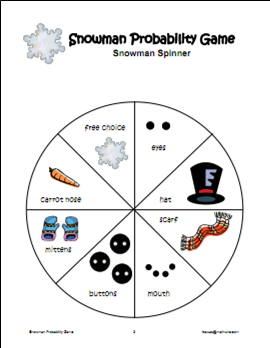
This activity is designed as a fun, seasonal data collection activity that introduces students to the probability of a spinner.  Although each piece of the snowman is equally likely to be spun, the actual game results are often quite different.


In this game, students spin to win all of the pieces to create the snowman.  Students may place a transparent spinner over the spinner template, or use a pencil and paper clip to create a spinner.


Before playing, ask students to estimate how many spins they think they will need to collect all of the pieces for their snowman.  Call on students to share both their number of spins and why they think that is a reasonable number.  Record these estimates for later discussion.


Give each student a copy of the game mat and insert the mat into a clear sheet protector.  Students may then use dry erase pens to draw the pieces as they collect them.


Have students use the Snowman Probability Recording Sheet to collect data on how many spins it takes to get all of the pieces.  Insert this sheet in a clear sheet protector for a renewable activity.  Be sure to collate the class data and analyze this larger sample to get an approximate number of spins required.


Download the Snowman Probability Game file which includes the game mat, spinner, directions and recording sheet.  

Thursday, December 15, 2011

Last Snowman Standing Game

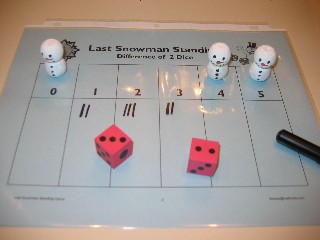
The snowmen face off in this game of addition facts. But beware! A toss of the die may mean the sun melts a snowman. Students practice addition facts as they try to be the last snowman standing because in this game the first person to remove all of his/her snowmen loses the game!

Download the  Last Snowman Standing Game for directions and game mats for three different versions of the game:
  • Sum of Two Dice Version to practice addition facts
  • Difference of Two Dice Version to practice subtraction facts
  • One Die Toss for a simplified version to analyze the probability of a die toss
Data Collection: The directions for each version also include directions for data collection and analysis of the outcomes of the games. Be sure to incorporate these activities, if at all possible, as games offer a highly motivational study in probability. Students love to "play games" to collect data. They're also eager to analyze games so that they learn how the game works and what strategies they can use to improve their odds of winning.

Differentiation: This game offers many opportunities to differentiate the activity. First of all, teachers are able to select from three different versions. Secondly, each teacher should differentiate the game analysis to meet the instructional level of his/her students. Most students can handle the questions with teacher guidance. Older students and talented primary students may be challenged to analyze the game and answer the questions in small groups.


Read about the Last Snowman Standing game on Mathwire.

Friday, November 18, 2011

Thanksgiving Probability


How about a little probability for Thanksgiving?  This handout is a simple review of probability using the letters in Thanksgiving.  Students must explain their answers to provide practice in writing and explaining their thinking.  There is a challenge question that might be thought about and explained in different ways, so it's always interesting to see which route students choose to use.

Sunday, October 16, 2011

Bat Probability

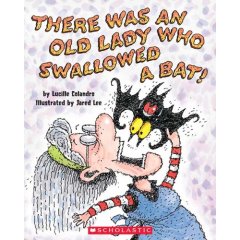
There Was An Old Lady Who Swallowed A Bat!
by Lucille Colandro

After reading the book, investigate Batty Old Lady Probability.  Students spin to collect all of the items the Batty Old Lady swallowed, and tally each spin on the recording sheet. They then calculate the total spins it took them to get all 7 items, and add that figure to the class data. Teachers may help students analyze the class data and learn about probability in the process. The pdf document includes directions, game mat, picture cards, spinner, recording sheet and writing to learn handout.

Wednesday, October 12, 2011

Pumpkin Jumble Game

Students toss a die to get pattern blocks to add to create a jack-o-lantern face. The first person to complete his/her jack-o-lantern wins the game. This game develops the concept of probability of a single die as students also have opportunities for Lucky or Unlucky tosses that add a twist to the game.


Data Collection & Analysis: This simple game provides a great opportunity for data collection and analysis of the probability of a one-die toss.


Have students use the recording sheet to capture  each die toss. After completing the game, students may add their results to a class data table to see if each number does indeed have an equal chance of winning.


Tuesday, September 6, 2011

Back-to-School Problem Solving


September is a great time for data collection activities as students are naturally curious about their new classmates. Ask questions that require students to analyze data and support their conclusions.

Challenge students to solve some of these problems to practice collecting, organizing and analyzing data in real-life applications. Require students to explain their reasoning and solution to develop mathematical communication skills.


Here's a sample 3rd grade problem that targets student understanding of probability:


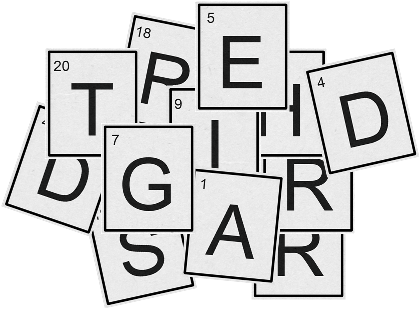
Third graders cut apart each of the letters in THIRD GRADERS and place
the squares in a bag. Kevin pulls out one square and looks at the letter.

  • What is the probability that the letter he pulls out will be the letter, D?  Explain how you know.
  • What is the probability that the letter he pulls out will be S?  Explain.
  • On Friday, his teacher says that if anyone can correctly predict which tile he or she will pull out the bag of THIRD GRADERS squares, the class will not have any homework over the weekend.  She asks Kevin's table to predict for the class.  They are nervous because the class is counting on them to say the right letter.
    •  Which letter should Kevin’s team predict that they will pull from the bag?
    •  Explain how you know that the students should predict this letter.
Note:  It is very important that students explain how they know their answers are correct.  They may use pictures, words and numbers to explain their thinking.

Wednesday, May 25, 2011

Online Resource: Probability Spinners

Math Playground:  Spinner
This online site allows users to customize a spinner by colors, then spin for trials.  There is a graph option to display the results by color as they are generated.  This is an effective online resource for data collection.  Students may easily generate data from larger trials than through the use of a real spinner.  


Many teachers use this kind of online generator after student's initial experience with classroom spinners and discussion of the resulting data from this small trial.  Students generate hypotheses which may be easily investigated using this online resource to capture more data.  A resulting data analysis confirms or disputes the hypotheses and should include a discussion of the use of online generators and randomness.


Note:  This site allows the user to customize the spinner by adding labels to each section (e.g. numbers, names, etc.) and to select how many different outcomes there will be.


Check out Math Playground's Probability Spinner.

Wednesday, March 2, 2011

Happy Birthday, Dr. Seuss!


Fish Out of Water

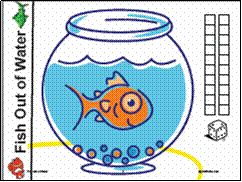
This is a basic counting game for younger students.  It's a great math activity to celebrate the birthday of Dr. Seuss, as the fish theme correlates well with this famous Dr. Seuss book.  Each student begins with 20 fish out of water.   Each player rolls a die and counts out that many fish to return to the fish bowl.   The first player to return all 20 of his/her fish to the bowl wins the game.   You may use foam fish cutouts and a plastic bowl for a more realistic version of the game or download the directions, game mat and center icons for Fish Out of Water.   This game was developed by Christine Sweeney, a Monmouth University student, for the ED 556 Probability Fair.  
  • Download the directions, game mat and center icons for the Fish out of Water game. 

Game Pieces:   Students may use any classroom counters as fish, but dollar stores often have collections of fish that may be used as game pieces for the game. Students may also  use goldfish crackers as a special treat for this birthday.

Data Analysis:  Even very young students can learn about probability by predicting how many dice rolls it will take them to get all of the fish back in the water.  A simple tally chart may be used to record both predictions and actual counts.  Lead a discussion with students to probe their understanding of the probability of a single die toss and to introduce basic concepts of probability -- equally likely, fair, probability, outcome.

Friday, February 11, 2011

Pig Dice App

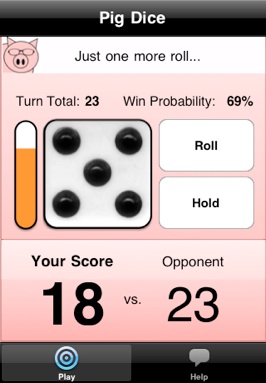
Now you can play the game of Pig on your iPhone with this free app that allows you to play against the computer.  Be forewarned that the computer in this app is a formidable opponent!  That being said, the app is useful for trying out different winning strategies and it's a fun game to have available on your phone for those wait times.

Terry's Note:  I think it's great for kids to see that it's cool to have math games on your iPhone.  Try it!  

Thursday, February 10, 2011

Game of Pig

Game of Pig:  one die version

This is best introduced as a class activity.   Students collect points for each toss of the die unless a ONE is tossed, which means they lose all of the points they have collected in the round.   To prevent losing their points, students may elect to stop at any point in the game before a ONE is tossed and they get to keep the points they collected but get no further points.   Students love the game and begin to appreciate that theoretical probability and experimental probability are often quite different! 

Game Analysis:  Once students are familiar with the game, encourage small groups to develop a "winning strategy" and explain it to their classmates. Then play the class game with groups competing to see who has the best strategy in the actual game. Repeat, as necessary, for students to modify strategies.  NOTE:  Some student strategies are:  stopping after 5 tosses, stopping when they have 20 points, stopping after the second toss of a 6 or a 5, etc.  Be sure to ask students to explain the thinking behind the strategy.

Terry's Note:  I have used this with students in Grades 1-12 as well as in teacher training sessions and everyone loves it!  Students record each toss and then must add up a string of numbers providing great practice in mental math.  Students also continue to search for that magic strategy that will help them win.  Along the way, they informally experience, and thus learn, a lot about experimental probability.  I found this game to be a great use of those few minutes at the end of class to keep students actively engaged.  No student ever groaned when I said we were going to play pig!
  • Download directions for playing the Pig Game in a whole class setting.
  • Download the Pig Template to use as a recording sheet.  Place the sheet in a plastic sheet protector and use dry erase markers to create a reusable recording sheet.
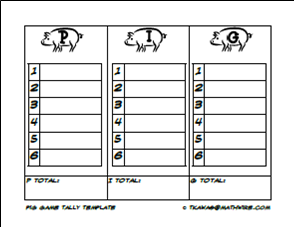
  • Have students record each die toss in a Pig Tally Template for easy data collection.  This method also groups data so that students see a visual representation of the frequency of each outcome.
  • Use copies of the Pig Handout as a writing activity.  Encourage students to write about the probability in Pig and what they have learned from playing the game.  OR use these sheets for student groups to write out their "winning strategy" and post them on a bulletin board for future reference.  Keep a running total of times each strategy is successful in winning.
  • Play Pig online.
  
Game of Pig:  Two dice version
Students should be familiar with the one-die version of Pig before playing the 2-dice version.   Tossing a one on either die means that the player loses all points collected in that round, if he/she has not stopped before the one is thrown.   Any player who is still playing when snake-eyes (double ones) are thrown, loses all points collected thus far in the whole game! 

Game Analysis:  Students need to develop different strategies for playing this 2-dice version of Pig.   After playing several times, student pairs might analyze the two-dice frequency chart to calculate the probability of a one being tossed.   Students can use this information to develop a winning strategy and compete against other teams to see whose strategy is most successful. 
  • Download  a two-dice toss frequency chart for students to use in determining the probability of different outcomes.
  • See online directions for playing Two-dice Pig.
  • Play an online version of Two-dice Pig against the computer.
  • See Two Dice Roll for an online simulation of two-dice toss that graphs the outcomes.  This is a great way for students to collect larger samples of data to analyze experimental probability against theoretical probability.  Groups of students might also use this simulator to generate dice tosses to test their winning strategies.

 Game of Skunk
After students have mastered the Pig Game, analyzed the probability of the game and identified winning strategies, introduce the Game of Skunk and challenge students to analyze the probability used in this game and develop a winning strategy.   How are the games alike and how are they different?   Does the same "winning strategy" work for both games?  

Tuesday, February 1, 2011

Valentine Probability

These Valentine's Day activities are based on the small candy hearts popular around this holiday. Instead of sayings, these mathematical hearts have letters. 

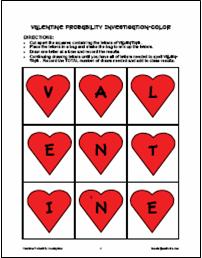
Students are trying to accumulate all of the letters in the word VALENTINE or HEART. They first predict how many letters they will have to draw from the bag, then they conduct the experiment, collect and organize data and analyze the class results. 


Materials:
  • Download Valentine Probability for a straightforward probability handout.
  • Download Valentine Probability Investigation for the hearts and recording sheet to conduct the probability investigation on how many letters students will have to draw (with replacement) to get all of the letters in the word VALENTINE. 
  • Download Heart Probability Investigation for the hearts and recording sheet to conduct the simplified probability investigation on how many letters students will have to draw (with replacement) to get all of the letters in the word HEART.

Thursday, July 15, 2010

The Game of Pig

Pig is one of my favorite probability games.  I have played the game with kindergarten through college level students and used it in teacher training sessions.  Everyone LOVES the game and it's fun to watch who plays it safe and who's the risk-taker.  


In my own classroom experience, I have found that this is best introduced as a class activity. Students collect points for each toss of the die unless a ONE is tossed, which means they lose all of the points they have collected in the round. To prevent losing their points, students may elect to stop at any point in the game before a ONE is tossed and they get to keep the points they collected but get no further points. Students love the game and begin to appreciate that theoretical probability and experimental probability are often quite different! 

I devised a method that uses only one die tossed by the teacher, so this is a great transition activity that quiets a class as they strain to hear and record the results of the die toss AND decide if they will stop or continue to play.   It's a win-win because students feel that they're playing, but they're actually learning a lot about the probability of a one-die toss.

  • Download Pig directions.
  • Download Pig template or Pig Tally template, and place in a sheet protector to record die tosses.  Students may use dry erase markers for a reusable recording sheet.  The Pig Tally template requires students to use tally marks to record each toss of the die.  This recording sheet is a very visual presentation of the results and proves extremely useful when students devise winning strategies, as described below.
Results:  Younger students may use calculators to total each column.  Older students should use mental math to find the sum of the die tosses.  Students should write the total of all 3 columns in the upper right hand corner of the template and circle it.

Extending the Data Collection & Analysis:
  • Ask pairs or small groups of students to talk about the game and come up with a winning strategy.  For example, some groups decide to stop once they have 20 points.  Another group decides to stop when they get 3 of any number.
  • Have each group share their winning strategy and explain why they think it is a winner.
  • Play the game again.  Groups MUST play according to their winning strategy.
  • Discuss the results and allow groups to refine their strategies, if desired, before playing 1-2 more times.
  • Finally, ask students to write about what they learned from this game.  Is there really a winning strategy that works all the time?  Explain your thinking.

Friday, July 9, 2010

Heads and Tails Investigation

Explore the probability of a one-coin toss using the Heads and Tails Game.  This is an easy game for young learners.  All you need to play is the Heads and Tails gameboard, two coins for markers and another coin to flip.  Use a coin toss to decide who will be heads and who will be tails.  Then the fun begins!


PLAYING THE GAME:
Both players place their marker coins on the star on the snake.  The player who is HEADS flips the coin first.  If the flip is HEADS, the player moves his/her marker one space toward the head.  If the flip is TAILS, the player doesn't move. 

Next, the TAILS player, flips the coin, moves one space if it lands on TAILS, stays put if it comes up HEADS.

Play continues switching back and forth until one of the players' markers reaches the head of tail of the snake to win the game.


DISCUSSION:

  • Do both players have an equal chance of winning?  Try keeping a record of several games to see if HEADS and TAILS really both win.

  • Does it matter who goes first?  Sometimes let HEADS go first; other times, let TAILS go first.

  • Use a simple tally sheet to record whether HEADS or TAILS wins each game.
VARIATION:

  • EXTENDED PLAY OPTION:  The HEADS player tosses the coin.  If it comes up HEADS, the player moves the coin one space toward the head and tosses again.  If it comes up TAILS, the player stops and does not move.   The TAILS player now tosses the coin.  If the toss comes up TAILS, the player moves the coin one space toward the tail and tosses again.  The player continues as long as the toss comes up TAILS.  The game continues until a player's marker reaches the HEAD or TAIL of the snake.


 DISCUSSION:  

  • Do both players still have an equal chance of winning? 

  • Does the game go faster this way?  Explain.

  • What was the longest move either HEADS or TAILS got on one turn?
MODIFICATIONS:

  • If young players have trouble tossing the coin, use a small container and let them drop the coin into the container. 

  • OR place the coin in a small see-through container such as a clear plastic jar with lid.  Players then simply shake the jar and place it down on the table on its lid.  It's easy to see  whether it landed on HEADS or TAILS without opening the jar.

  • Buy larger coins at the dollar store.  Remember that these are not the same weight as real coins and any imperfections may affect the outcome of the games.  This could prove an interesting investigation for older players.  Are some coins HEADS-winning coins and others TAILS-winning coins or are they all fairly equal?

Sunday, December 20, 2009

Last Snowman Standing Game

The snowmen face off in this game of addition facts. But beware! A toss of the die may mean the sun melts a snowman. Students practice addition facts as they try to be the last snowman standing because in this game the first person to remove all of his/her snowmen loses the game!


The snowmen pictured above were created with two wooden beads glued together, then painted white, The face was added with sharpie pens. Just be sure to buy the beads that have a flat bottom so that the snowmen will stand. Or, use any manipulative as snowmen.

Download the Last Snowman Standing Game which includes directions and game mats for three different versions of the game:
  • Sum of Two Dice Version to practice addition facts
  • Difference of Two Dice Version to practice subtraction facts
  • One Die Toss for a simplified version to analyze the probability of a die toss

Data Collection: The directions for each version also include directions for data collection and analysis of the outcomes of the games. Be sure to incorporate these activities, if at all possible, as games offer a highly motivational study in probability. Students love to "play games" to collect data. They're also eager to analyze games so that they learn how the game works and what strategies they can use to improve their odds of winning.

Differentiation: This game offers many opportunities to differentiate the activity. First of all, teachers are able to select from three different versions. Secondly, each teacher should differentiate the game analysis to meet the instructional level of his/her students. Most students can handle the questions with teacher guidance. Older students and talented primary students may be challenged to analyze the game and answer the questions in small groups.  

Wednesday, December 2, 2009

Gingerbread Math Games


Counting Game:  Run, Gingerbread Man, Run

This game was designed to introduce students to the randomness of spinners and dice. Each color gingerbread man starts at the same place and has the same chance of winning by crossing the finish line, but does it work out that way? Students will enjoy playing the game AND use a clothespin graph [see sample on right] to collect some useful data on the winners.


Once students have collected class data from playing many games, they will come together to analyze the clothespin graph results. Students will be asked to discuss whether or not they think the game is fair for all of the gingerbread men and explain their reasoning.

Download the Run, Gingerbread, Run game so that students can get started playing and collecting data. The pdf file contains the spinner, gameboard, clothespin graph icons, and an optional tally sheet. 


Coordinate Graphing Game:  Catch the Gingerbread Men

For this game, students toss two dice (one regular and one marked A-B-C-D-E-F), form an ordered pair (e.g. B5), then remove the gingerbread man from that space, if there is one. Play continues until the timer rings or until one player has caught 10 gingerbread men. Students love playing the game and they get to practice their coordinate graphing skills in the process.


Coordinate Pairs: This seasonal version of the classic Battleship game provides practice in forming coordinate pairs, identifying the x-coordinate (A-F), then the y-coordinate (1-6) so that spaces are identified as C3 or E6. Hopefully, lots of practice will help students transition to the algebraic ordered pairs (x,y) where x and y are both numbers. Just be certain to reinforce the notion that the x-coordinate (across) comes before the y-coordinate (up or down). The alphabetical cues (across comes before up or down) help some students remember the order.


Download Catch the Gingerbread Men game mat, game pieces and directions for playing the game.